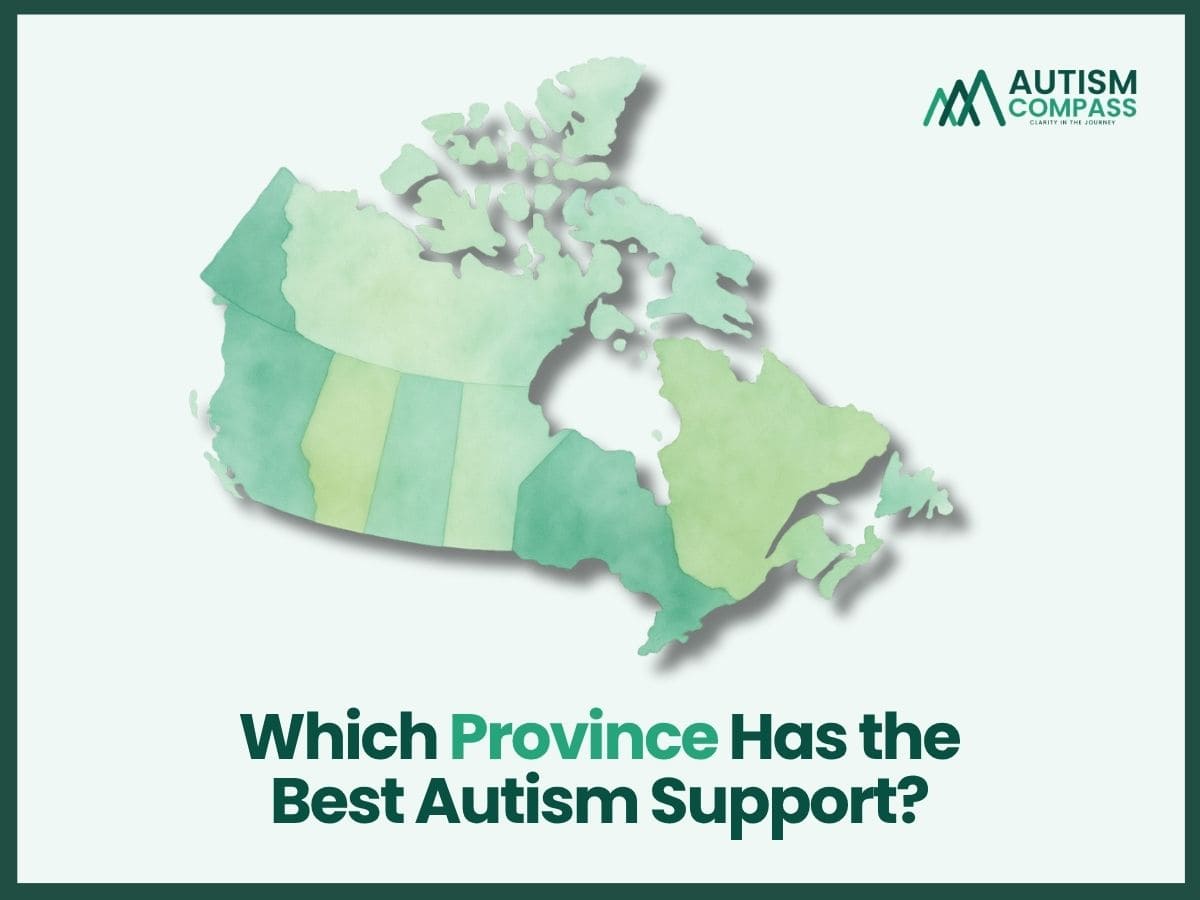
Which Province Has the Best Autism Support?
If you’re asking which province has the best autism support, you’re probably not asking out of curiosity. You’re likely lying awake, wondering if a move could change your child’s life, whether your family could be doing better financially, or what care might look like years from now, when you’re not the one holding it all together anymore.
I get it. I wish I could give you a clean answer: move here, and everything gets easier.
But that’s not how this works.
Why There’s No Single “Best” Province
Every province in Canada handles autism support differently. Funding amounts differ. Wait times for assessments differ. School systems handle individualized education plans (IEPs) differently. And the cost of living can swallow up extra funding faster than you’d expect.
A province that’s wonderful for a family in Toronto might feel completely different for a family in rural Ontario. A funding program that looks generous on paper might come with a two-year waitlist that makes it almost meaningless in practice.
So instead of crowning a winner, I want to walk through what each province and territory actually offers: the funding, the wait times, the school supports, and the day-to-day realities families are living. My goal is to help you ask better questions, not hand you a ranking that doesn’t match your real life.
If you’re looking for a quick answer, here’s the short version:
There isn’t a single province that’s objectively “best” for every autistic child or family. The right fit depends on your child’s needs, your budget, where you’ll live, and how important things like funding, wait times, school supports, and access to specialists are to you.
That said, a few provinces tend to stand out in different ways:
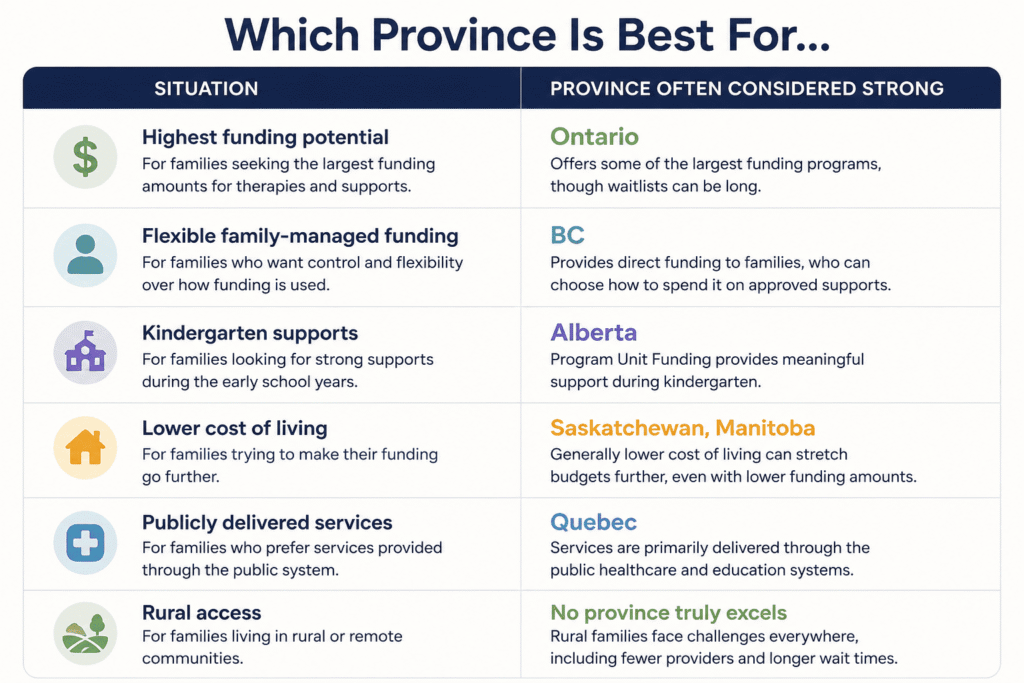
- Alberta is often considered one of the strongest provinces for childhood funding and kindergarten supports, particularly through FSCD and Program Unit Funding (PUF).
- Ontario offers some of the largest autism funding programs in Canada, but families frequently report long wait times for assessments and services.
- British Columbia gives families significant flexibility through direct funding, allowing parents to choose many of their own providers and supports.
- Quebec relies more heavily on publicly delivered services, which can reduce out-of-pocket costs but often comes with longer waits for diagnosis and intervention.
- Lower-cost provinces like Saskatchewan, Manitoba, New Brunswick, and Nova Scotia may offer less funding on paper, but some families find their dollars stretch further because housing and everyday expenses are lower.
The reality is that funding amounts alone rarely tell the whole story. A family receiving less funding in a lower-cost city may end up in a better financial position than a family receiving more funding in Vancouver or Toronto. That’s why it’s important to look at the full picture before making a decision.
What to Look at Beyond the Headline Numbers
Before we dive in province by province, here are a few things I’d encourage you to keep in mind as you read:
- Funding amounts often look bigger than they actually are once you factor in the cost of therapy in that province, and the cost of living overall
- Wait times for diagnosis can vary wildly, even within the same province, depending on whether you’re in a major city or a rural or remote area
- School supports depend heavily on individual school boards and even individual schools, not just provincial policy
- Moving itself is hard on autistic kids, who often rely on routine, familiar people, and predictable environments
- Specialist relationships take years to build, and starting over somewhere new means starting from zero
With that in mind, let’s look at what each province and territory offers.
Ontario
Ontario is home to the Ontario Autism Program (OAP), which provides core funding for therapies like applied behaviour analysis (ABA) and speech therapy. On paper, the funding amounts can be significant.
In practice, wait times have been a major sticking point for years. Families in cities like Toronto and Ottawa often wait many months to several years for diagnostic assessments, depending on the child’s age, the region, and whether they access public or private services. Accessing funded therapy through the OAP has also been a source of frustration, with many families reporting lengthy waits before receiving any kind of meaningful support.
Pros: Larger funding amounts compared to many provinces, more private therapy providers to choose from (especially in urban areas), strong advocacy community.
Cons: Long wait times for diagnosis and funded services, high cost of living (especially in the Greater Toronto Area), funding doesn’t always stretch as far as it appears once therapy costs are factored in.
Wait-time reality: Families commonly report waiting one to three years for publicly funded assessments in some regions, while access to funded therapy can take even longer depending on demand and program availability.
… Families who don’t have access to good benefits through their jobs are paying lots of money for speech therapy, occupational and/or physiotherapy plus ABA therapy. That’s a tremendous amount of financial strain on families …
Reddit User AryaLyannaOlenna, Autism Parent in Ontario
British Columbia
British Columbia offers direct funding to families through its Autism Funding Program, with different amounts depending on the child’s age. Families receive the funding directly and choose how to spend it on approved therapies and services – a model parents highly value.
This flexibility is one of BC’s biggest strengths. Parents can decide which therapies are most important for their child and select providers that fit their family’s needs. However, the funding amount hasn’t kept pace with the actual cost of therapy in many parts of the province, especially in Vancouver and Victoria, where private ABA therapy, speech therapy, and occupational therapy rates can be high.
Pros: Direct funding gives families more control over how money is spent, decent network of private providers in urban centres, flexibility to tailor supports to a child’s needs.
Cons: Funding amounts often don’t cover the real cost of therapy in expensive cities, wait times for diagnosis can be long, and rural and northern families have far fewer providers to choose from.
Wait-time reality: While BC residents enjoy generally shorter wait times than most of the country, families may still wait many months to several years for a publicly funded diagnostic assessment, depending on their region. Even after receiving funding, some families report difficulty finding available therapists, particularly outside major urban centres.
One thing to keep in mind is that BC’s autism support system is currently in a period of transition. The province has announced plans to move toward a broader Children and Youth with Support Needs (CYSN) funding model that focuses on functional needs rather than diagnosis alone.
Supporters argue that the changes could improve access for children with significant disabilities who may not have qualified for autism-specific funding in the past. Critics worry that some autistic children could receive less support if they are deemed not to have sufficient functional needs under the new framework.
Reacting to the proposed changes, one BC parent wrote on Reddit that many families were concerned their children could lose access to funding if they were not assessed as having sufficient functional needs.
Alberta
Alberta provides funding through Family Support for Children with Disabilities (FSCD) and Program Unit Funding (PUF) for preschool and kindergarten-aged children. For many families, Alberta’s early intervention system is one of the province’s biggest strengths. PUF funding can provide meaningful support during the years when early intervention often has the greatest impact.
Wait times for diagnosis vary significantly depending on location. Families in Calgary and Edmonton generally have better access to assessment services, specialists, and therapy providers than families in rural and northern Alberta, where travel and provider shortages can create additional barriers.
Pros: Strong early childhood funding, meaningful preschool and kindergarten supports through PUF, good availability of private providers in major cities, lower cost of living than BC or Ontario in many areas.
Cons: Wait times for diagnosis can still stretch into many months, rural families often face long travel distances for services, and many parents find the transition after kindergarten challenging as supports become more dependent on school resources, staffing levels, and navigating multiple programs.
Wait-time reality: While Alberta is often viewed favourably for funding during the early years, many families report lengthy waits for assessments, therapy services, and FSCD supports. Access can vary dramatically depending on where a family lives and whether they are able to access private services.
One challenge that is frequently overlooked is the school system itself. Although supports do not end after kindergarten, many parents feel that the highly supported early intervention years are followed by a more complex system that relies heavily on school-based resources. Some families report excellent experiences, while others struggle to secure the educational supports their child needs. For those considering private schools or specialized programs, costs can quickly add up to tens of thousands of dollars per year.
“The biggest issue we face right now is not GETTING approved for the funding; the issue is finding staff to work in these centers…”
Quebec
Quebec’s autism support system operates primarily through the public healthcare and education systems, with services delivered through Integrated Health and Social Services Centres (CISSS) and Integrated University Health and Social Services Centres (CIUSSS), depending on the region.
Quebec takes a different approach than many other provinces. Rather than providing families with autism funding to spend on private therapies, the province delivers many services through the public system. The tradeoff is that while services are often free, families may wait months or even years to access them.
Pros: Therapy and support services are often provided at little or no cost once a child is accepted into the public system, strong special education supports in many schools, lower cost of living than Ontario and BC in many regions.
Cons: Long wait times for diagnosis and therapy services, many families pay for private therapy while waiting, access to services can vary significantly depending on where you live.
Wait-time reality: Many Quebec families report waiting months or even years for assessments and publicly funded services. Families in larger cities may have more options, while those in smaller communities often face longer waits and fewer providers.
One of Quebec’s biggest strengths is that many services are publicly funded once families are connected to the system. The challenge is getting there. Many parents describe a frustrating period between realizing their child needs help and actually receiving support. During that time, some families choose to pay privately for speech therapy, occupational therapy, or other services so their child doesn’t miss out on valuable intervention during the early years.
New Brunswick
New Brunswick offers an Early Intervention Program for young children, along with school-based supports for autistic children and youth. Like many smaller provinces, the biggest challenge isn’t necessarily funding, it’s access. Families in larger centres such as Moncton, Fredericton, and Saint John generally have more options, while those in rural communities may face longer wait times and fewer therapy providers.
Pros: Lower cost of living means available funding can often stretch further than it would in larger provinces, early intervention services are available for young children, and some supports may be accessed before a formal diagnosis is complete.
Cons: Fewer therapy providers than larger provinces, especially outside major centres, long wait times for assessments and specialist services, and fewer autism-specific resources than families may find in provinces like Alberta, Ontario, or BC.
Wait-time reality: Families often report waiting many months for assessments and services, particularly in rural communities. Access is generally better in Moncton, Fredericton, and Saint John, where more specialists and therapy providers are available.
One of New Brunswick’s biggest challenges is geography. Families living outside the province’s larger cities may need to travel significant distances for assessments, therapy appointments, and specialist services. While the lower cost of living can make private services more affordable than in some provinces, finding providers can still be difficult in many areas.
Nova Scotia
Nova Scotia provides early intervention services and school-based supports for autistic children. Families in Halifax generally have the best access to assessments, therapy providers, and specialists, while those in smaller communities often face longer waits and additional travel to access services.
Pros: Growing number of private therapy providers in Halifax, early intervention services may be available before a formal diagnosis in some cases, lower cost of living than Ontario or BC.
Cons: Fewer specialists and therapy providers outside Halifax, long travel times for many families, funding amounts are generally smaller than in provinces like Alberta or BC.
Wait-time reality: Families often report waiting many months for assessments and services, particularly outside Halifax. While access has improved in recent years, geography remains a significant barrier for many families.
“One on One assignment of support staff is incredibly rare, and one staff member is frequently supporting multiple students of varied requirements at once.”
Prince Edward Island
Prince Edward Island provides autism supports through the Early Years Autism Service, Preschool Autism Funding, and School-Age Autism Funding through the AccessAbility Supports program. For many families, one of PEI’s biggest advantages is its size. Schools, service providers, and support programs can feel more connected than they do in larger provinces.
Pros: Lower cost of living than many larger provinces, shorter travel distances within the province, smaller communities can make it easier to build relationships with schools and service providers.
Cons: Limited number of specialists and therapy providers, long waits for some assessments and services, families sometimes need to travel off-island for specialized assessments or treatment, fewer therapy options than larger provinces.
Wait-time reality: The biggest challenge for many PEI families is access. While the province is small, some specialized services simply aren’t available on the Island. Families may need to travel to Nova Scotia, New Brunswick, or elsewhere for certain assessments, specialists, and therapies.
PEI’s smaller size can make the system feel more personal, but it also means there are fewer providers and fewer options when services are needed. Families may find it easier to navigate the system, but harder to find specialized supports close to home.
Newfoundland and Labrador
Newfoundland and Labrador provides autism supports through programs such as the Direct Home Services Program (DHSP), the Intensive Applied Behaviour Analysis (ABA) Program, and school-based supports. Families in St. John’s generally have the best access to assessments, specialists, and therapy providers, while those living in smaller communities often face longer waits and significant travel to access services.
Pros: Lower cost of living than many provinces, government-funded early intervention services are available for young children, strong community connections in many regions.
Cons: Many specialized services are concentrated in St. John’s, long travel distances for families living outside major centres, lengthy waits for assessments and services, fewer private therapy providers than larger provinces.
Wait-time reality: For many families, the challenge isn’t just waiting for services, it’s getting to them. Depending on where they live, accessing assessments, therapy, and specialist appointments can require hours of travel and time away from work or school.
Families living outside St. John’s will likely have fewer local options and may need to travel for specialized assessments, therapy, and other autism-related services. While supports are available, access can vary significantly depending on where a family lives.
Saskatchewan
Saskatchewan provides autism supports through programs such as the Autism Spectrum Disorder Individualized Funding (ASD-IF) program, along with early intervention and school-based services. Families in Regina and Saskatoon generally have the best access to assessments, specialists, and therapy providers, while those living in smaller communities often face longer waits and additional travel to access services.
Pros: Lower cost of living than Alberta, BC, or Ontario, growing number of private providers in Regina and Saskatoon, funding can help offset the cost of therapy and other supports.
Cons: Long travel distances for many rural families, wait times for diagnosis and services can stretch into months, fewer providers than larger provinces, funding may not cover the full cost of therapy and support services.
Wait-time reality: Where you live can make a big difference. Families in Regina and Saskatoon generally have more options, while those in rural communities may wait longer for assessments and travel significant distances for therapy and specialist appointments.
One advantage Saskatchewan families often mention is that the lower cost of living can make available funding stretch further than it would in provinces like BC or Ontario. The challenge is that many families outside the province’s larger cities have fewer services available close to home.
Manitoba
Manitoba provides autism supports through the Manitoba ABA Program (MABACA), the Early Learning Program, Children’s disABILITY Services, and school-based supports. Families can access behavioural intervention, respite services, family supports, and educational accommodations, although access often depends on where they live within the province.
Pros: Lower cost of living than Ontario, BC, or Alberta, good access to specialists and private providers in Winnipeg, a range of supports are available through Children’s disABILITY Services.
Cons: Fewer services outside Winnipeg, long wait times for diagnosis and therapy in some regions, rural families often travel significant distances for appointments and assessments.
Wait-time reality: Many Manitoba families report that where they live makes a big difference. Families in Winnipeg generally have more options, while those in smaller communities may wait longer for services and travel farther to access them.
One advantage Manitoba families often mention is that the lower cost of living can make therapy and other supports more affordable. The challenge is that many specialists, therapy providers, and autism services are concentrated in Winnipeg, leaving families in other parts of the province with fewer local options.
Yukon, Northwest Territories, and Nunavut
The three territories face unique challenges that don’t fit neatly into the same framework as the provinces. While funding and support programs do exist, the biggest challenge for many families isn’t qualifying for services-it’s accessing them.
In much of Yukon, the Northwest Territories, and Nunavut, specialist services are limited or unavailable locally. Many families need to travel to larger centres for diagnostic assessments, developmental pediatricians, speech-language pathologists, occupational therapists, and other specialized services. In some cases, that means flying to larger centres in Alberta, British Columbia, or elsewhere in Canada, and spending days or even weeks away from home.
That doesn’t mean families are left completely on their own. The territories often have strong community connections, dedicated local support workers, and travel assistance programs that help families access services outside their region. However, getting those services often requires much more time, planning, and travel than it would for families living in larger cities.
Pros
- Strong community connections and close-knit support networks
- Some travel assistance programs help families access services in southern Canada
- Smaller communities can sometimes provide more personalized support and coordination
Cons
- Very limited access to local specialists
- Many assessments and therapies require travel outside the territory
- Long wait times can be compounded by transportation and weather challenges
- Fewer private therapy options than in southern provinces
Wait-time reality: Wait times can be difficult to compare because many services are accessed outside the territory. Families may wait not only for appointments, but also for travel arrangements, specialist availability, and weather-related delays.
For many families, the question isn’t whether support exists, it’s how far they need to travel to access it. If you’re considering a move to one of Canada’s territories, it’s worth looking beyond funding programs and asking practical questions: Where are the specialists located? How often will we need to travel? What happens if services aren’t available locally?
So, Should You Move?
If you’re seriously considering a move, here are a few things I’d encourage you to dig into before you decide:
- Look at the actual cost of therapy in the province or city you’re considering, not just the funding amount
- Ask about residency requirements. Some funding programs require you to live in the province for a certain amount of time before you qualify
- Reach out to local parent groups in the area you’re considering and ask what their day-to-day experience is actually like
- Think about what your child would lose, in terms of routines, therapists, friends, and familiar places, and weigh that against what they might gain
- Consider the size of the community you’re moving to. Across Canada, autism services are concentrated in cities and larger towns. If a move is on the table, choosing a city or a sizeable town will almost always give your family more options for diagnosis, therapy, and ongoing support than a rural community, regardless of which province you’re looking at
There’s no wrong answer here. Wherever you are, and wherever you end up, you’re doing this because you love your kid and you want what’s best for them. That’s the thing that matters most, no matter which province you call home.
Where To Get Help In Your Province
If you’re feeling overwhelmed, start here.
I’ve listed organizations across Canada that can help you understand local services, funding programs, school supports, therapy options, and next steps. If I were new to a province and didn’t know where to begin, these are some of the first calls I would make.
A few things to keep in mind:
- Free doesn’t always mean immediate. Many of these organizations are working with limited staff and high demand. If you leave a message and don’t hear back right away, don’t be discouraged.
- Local doesn’t always mean local. Many organizations serve an entire province or region, even if they’re based in a specific city.
- This isn’t a complete list. Think of it as a starting point. Your child’s doctor, school team, local parent groups, and other families can often point you toward additional resources that aren’t widely advertised.
Most importantly, wherever you live in Canada, you don’t have to figure this out alone. Someone on this list has likely helped another family facing many of the same questions you’re asking today.